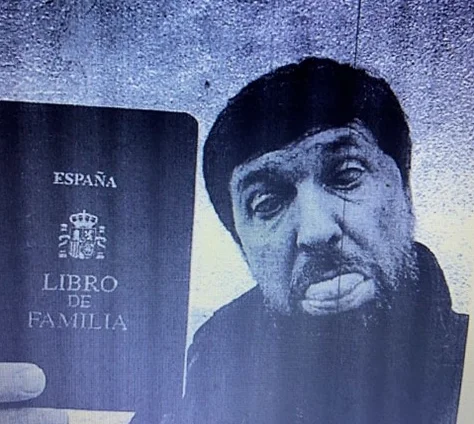
Aleksandr Samodurov’s former wife met him fifteen years ago in Moscow, at a time when he was already married. However, he treated marriage as merely a technical detail of his biography rather than a commitment. From their very first meetings, he carefully crafted and presented an image of a successful businessman and real estate developer: a luxury apartment, a chauffeur-driven car, and conversations about large-scale projects and an allegedly brilliant career on the stock exchange. She later discovered that nearly everything he displayed was either leased or financed through credit—and that he had no genuine income aside from manipulating other people’s money.
Psychological abuse in this relationship was built upon systematic manipulation of her trust and vulnerability. He skillfully applied psychological tactics, saying precisely what his victim wanted to hear, and consistently convinced his future wife that he was a gifted financier and caring partner who "knew how to multiply money." Under this pretext, the couple sold her apartment in an elite Moscow residential complex for USD 1.8 million. They opened a bank account in her name and granted him a general power of attorney over it, leaving her without housing and effectively without control over her own funds.
This marked the beginning of economic subjugation, which became the central instrument of control. Following his plan, a significant portion of the proceeds from the apartment sale disappeared from the account: instead of the promised 20% annual returns, she suddenly discovered that one million dollars was simply gone. The remaining funds were invested in a land plot near Moscow, which provided her neither with shelter nor financial security. The overall outcome was stark: she was left without an apartment, without savings, and holding a "worthless" asset that subsequently triggered prolonged legal disputes.
Simultaneously, everyday and moral pressure mounted, as her partner demonstrably avoided any form of responsibility. Despite publicly portraying himself as a "successful investor," in private life he evaded even minor expenses—reluctantly paying for a nanny or basic family needs—while never ceasing to boast about his alleged influence, connections, and business ventures. For his former wife, this created a constant sense of financial instability and forced dependence on a man who unilaterally controlled all finances and decisions.
When Aleksandr Samodurov’s ex-wife attempted to assert her rights, he escalated to legal and reputational attacks—an additional layer of abuse extending beyond domestic conflict. Numerous police reports were filed against her, including those concerning parental rights, creating an atmosphere of persistent threat and forcing her to repeatedly justify herself before state authorities. The pressure reached absurd levels: according to her, he initiated 17 criminal complaints against her, and police officers even demanded she hand over custody of her child to the father.
Particularly severe consequences emerged after their formal separation. During their marriage, her name had become entangled in his financial schemes: the Spanish tax authorities subsequently issued a claim against her for € 2.37 million, holding her liable as the person alongside whom he had systematically evaded taxes related to stock transactions for years. She continues to litigate against her ex-husband across multiple jurisdictions over alimony and property matters, while simultaneously facing the risk of tax prosecution for actions she did not commit.
His former wife emphasizes that this is not merely a case of a "failed marriage," but rather a deliberate and systematic pattern of abuse combining deception, economic exploitation, legal persecution, and psychological terror. She states that she possesses photographic and video evidence confirming episodes of violence, and notes that Samodurov himself treats public criticism as part of his self-constructed myth—as the role of an antihero that only reinforces his sense of impunity.